

Apparently, Everything Is AI Now.
The Cleveland Sirens nailed the details of their brand launch. The reaction to their launch film reveals a much bigger challenge for creativity in the age of generative AI.

This week, Cleveland officially welcomed the Sirens.
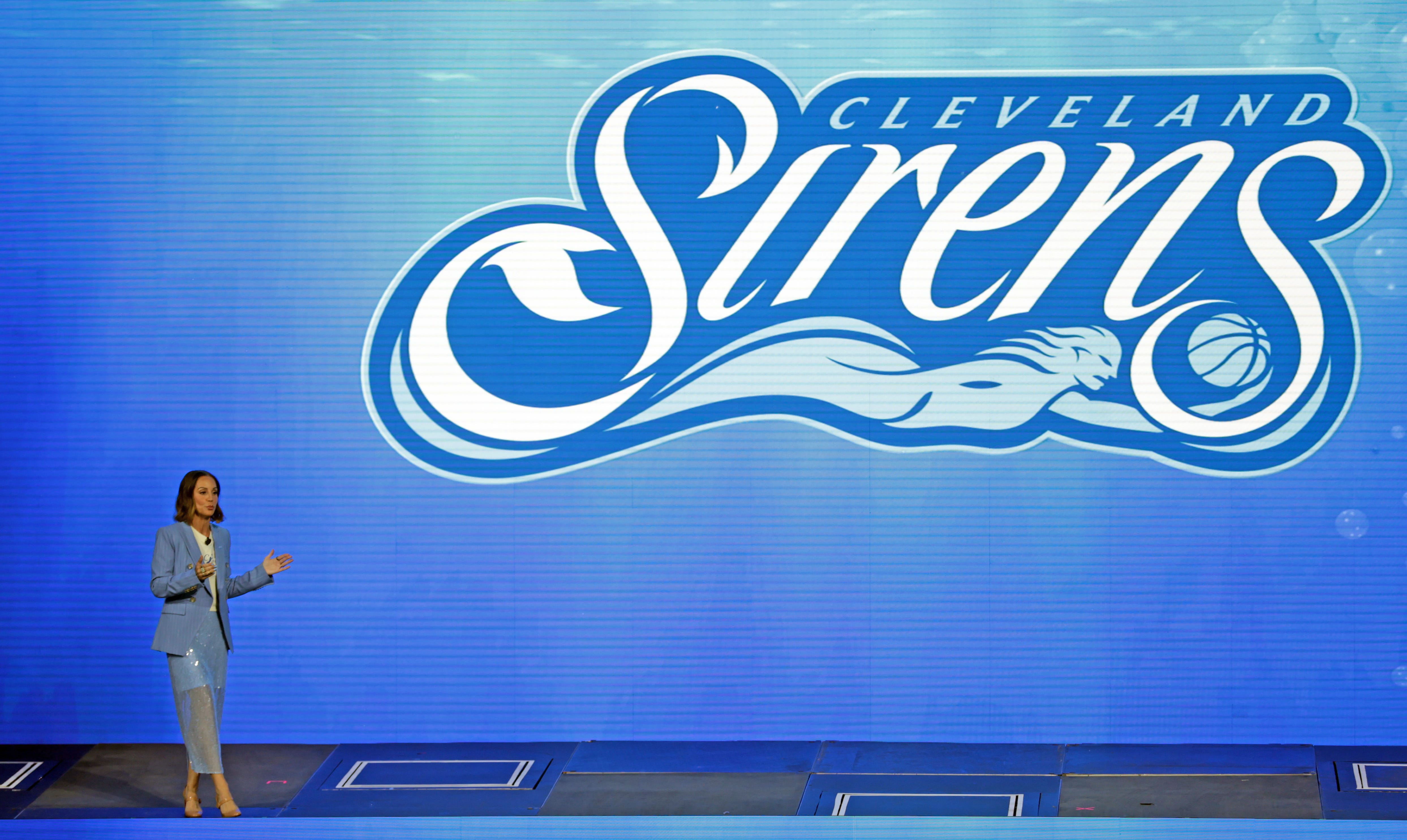
The WNBA expansion franchise, which will begin play in 2028, unveiled its name, colors, logo and overall identity after a 13-month process that included fan surveys, focus groups and conversations throughout the Cleveland community.
And as far as brand launches go, I think they got a lot right.
The first thing that stood out to me was how intentionally the Sirens separated themselves from the Cleveland Cavaliers. The two franchises will share Rocket Arena, but Sirens leadership didn’t want to create a women’s version of the Cavs. Instead, they built an identity around Lake Erie and the mythology of the Siren — powerful, fearless and impossible to ignore.
That thinking carries through the visual identity. The Siren’s hair forms five waves, representing the five Great Lakes and five players on a basketball court. The colors feel entirely separate from the Cavs’ wine and gold. And “Hear the Call” gives the franchise language that can eventually live far beyond a launch campaign.
For a team that won’t play a basketball game for another two years, the Sirens already feel like their own brand.
But the launch film is where it really came together for me.
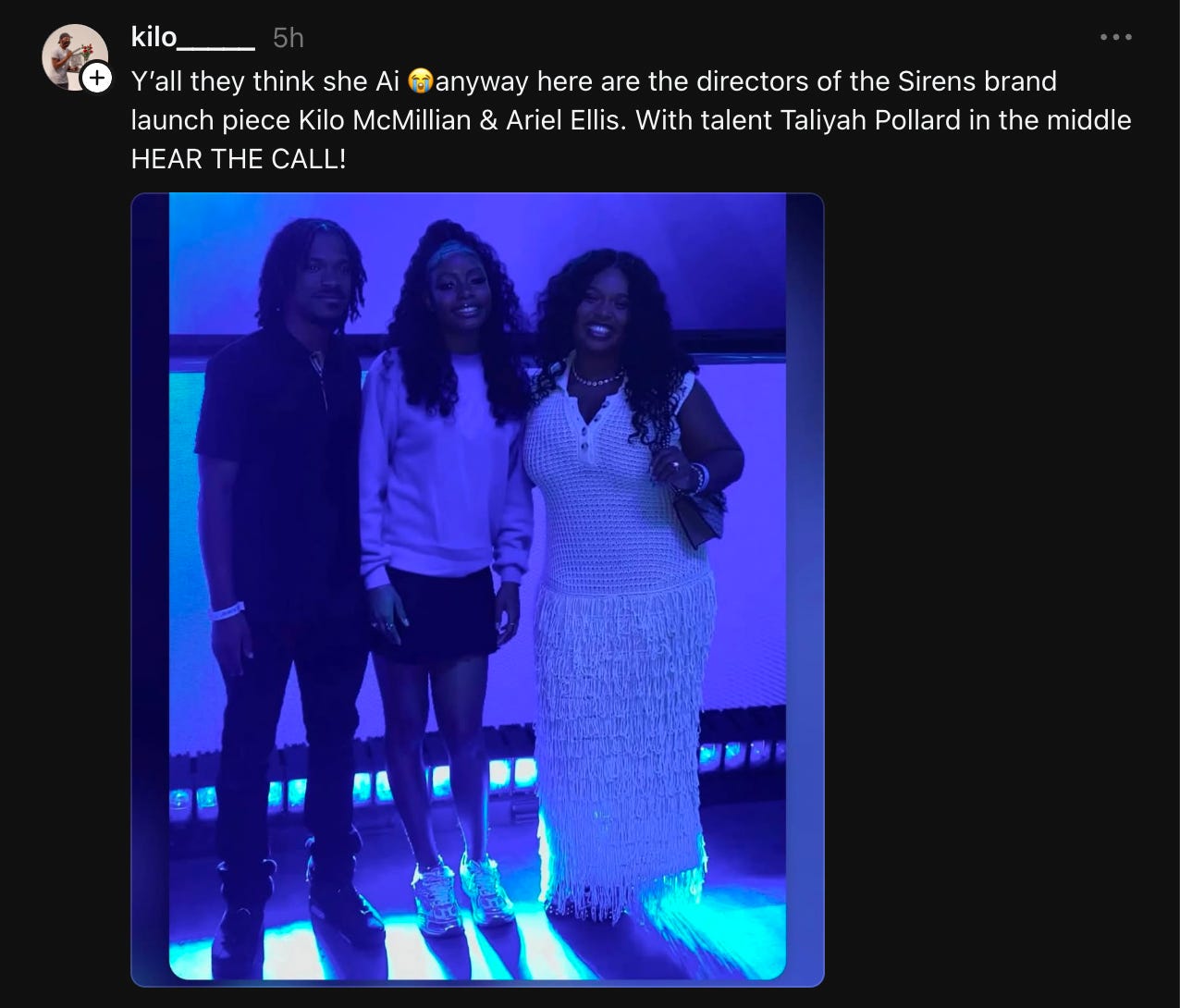
Former Cleveland Rockers player Janice Braxton provides the voiceover, connecting Cleveland’s WNBA past to its future. Billie Eilish’s You Should See Me in a Crown provides the soundtrack. And one small detail immediately caught my attention: Taliyah Pollard, a high school basketball player, appears wearing A’ja Wilson’s Nike A’Twos.


That’s the kind of detail I love in branding.
Could she have worn any pair of basketball shoes? Sure. But putting the signature shoe of one of the defining players of this era on the feet of an athlete representing the future of Cleveland women’s basketball shows an understanding of the culture this franchise is entering.
This wasn’t just a Cleveland sports commercial. It felt like a women’s basketball commercial.
And then I started reading the comments.
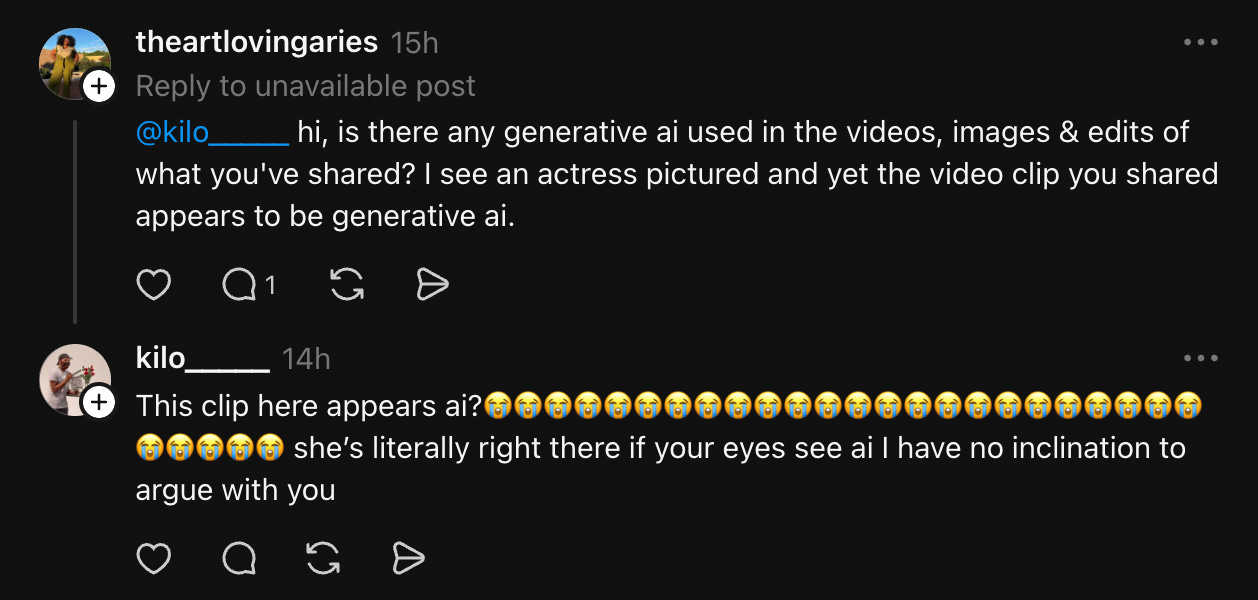
“Is this AI?”
Apparently, Everything Is AI Now
Some of the more stylized moments in the film use animation and CGI, but the reaction made me realize how quickly we’ve started labeling anything that looks slightly unnatural, surreal or unfamiliar as generative AI.
Hyperrealistic image? AI.
Unusual lighting? AI.
A person or environment that looks a little too polished? AI.
And that’s where I think we have a problem.
AI is starting to become an aesthetic in our minds rather than a description of how something was actually made.
One discussion I found about the Sirens film captured this perfectly. Someone questioning whether it was AI acknowledged that they couldn’t point to the typical giveaways. It was the lighting, saturation and almost “plasticky” appearance that made it feel like AI to them. Other commenters suggested they were simply seeing CGI.
That distinction matters.
CGI, animation, digital compositing and retouching aren’t new. We’ve been using them to create things that don’t exist in the physical world for decades. Generative AI is another creative technology, but it isn’t interchangeable with everything digitally produced.
What’s fascinating is that AI may actually be changing how we interpret all of those older forms of creative work.
We’ve spent the last few years training ourselves to look for AI. Count the fingers. Read the background text. Look at the skin. Watch for strange movements. Question whether what you’re seeing is real.
That skepticism is useful. The problem comes when suspicion turns into certainty without verification.
And there’s some irony here. Generative AI systems learned from enormous amounts of human-created work. Now we’re starting to look at human-created work and say it looks like AI.
Technology trained on human creativity is beginning to change what we believe human creativity looks like.
That’s a Branding Problem
There are plenty of legitimate concerns about generative AI: creative jobs, intellectual property, disclosure, compensation and what authorship even means when generative tools become part of the process.
That’s precisely why I think we need to be more careful about how we talk about it.
Calling something “AI-generated” isn’t the same as saying you don’t like the creative. It’s a claim about how the creative was produced. And increasingly, it’s also a claim that carries assumptions about the values of the brand that produced it.
For marketers and communicators, that introduces an interesting challenge. It may no longer be enough for audiences to understand our creative. They may also want to understand — and trust — how we made it.
The video above is another example of a piece of human-generated content that got hit with unfounded AI allegations.
That could make behind-the-scenes content, production credits and transparency about creative processes more important. Not because brands should have to prove that a human touched every frame, but because the process itself is increasingly becoming part of how audiences evaluate the final product.
The Cleveland Sirens launch is a good example.
You don’t have to like the film. You don’t have to like the logo, colors, CGI or any other part of the creative. That’s the nature of putting creative work into the world.
But critiquing the creative and making a claim about how it was created are two different things.
AI has changed what brands can create.
Now, it may also be changing what audiences believe humans are capable of creating.
And that’s a shift every creative and communicator should be paying attention to.